Back to Hospitals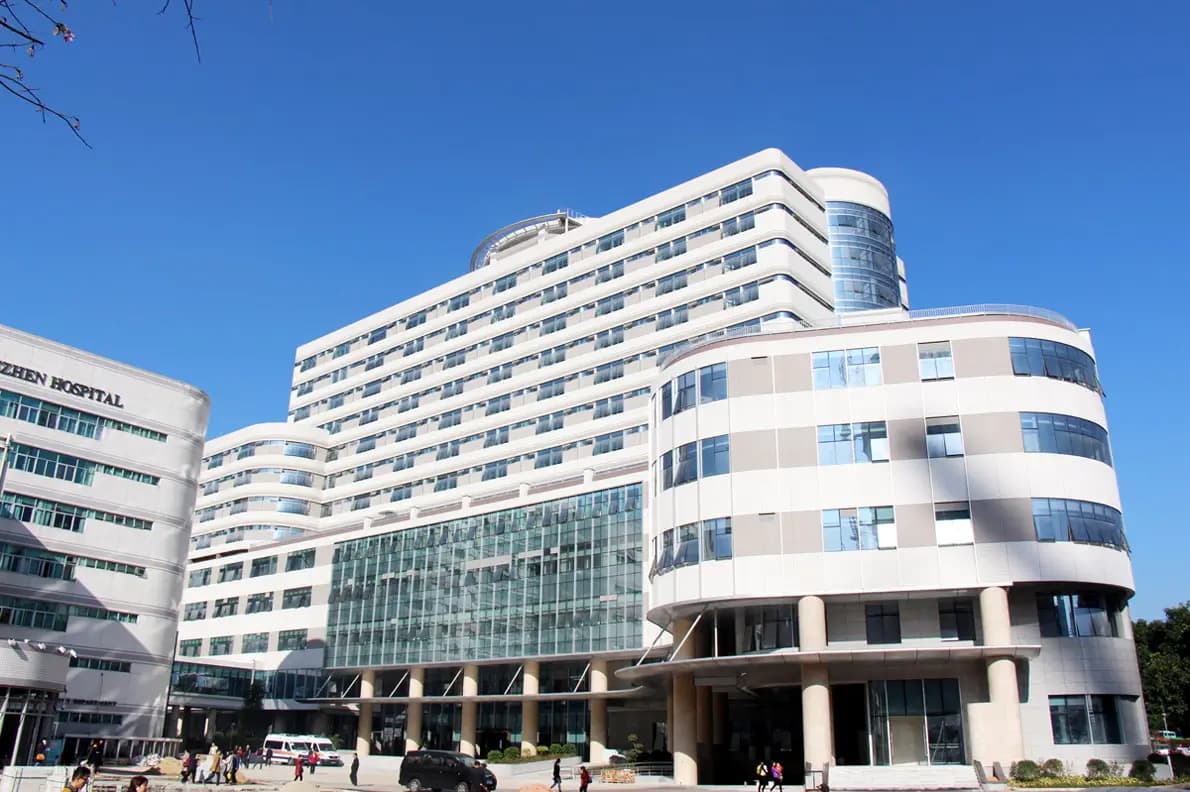
Grade III Grade A
Peking University Shenzhen Hospital
Peking University Shenzhen Hospital is a modern, tertiary-level Class A comprehensive public hospital invested and built by the Shenzhen Municipal Government, integrating medical treatment, scientific research, and teaching. Located in the Futian Central District, the hospital opened at the end of 1999, originally named "Shenzhen Central Hospital." In October 2000, the Shenzhen Municipal Government and Peking University signed a cooperation agreement, pioneering close cooperation between a hospital and university in China, incorporating the hospital into the Peking University Affiliated Hospital Management System and renaming it "Peking University Shenzhen Hospital." The hospital covers an area of 59,000 square meters, with a current total building area of 248,000 square meters. It is a hospital without walls, with "zero parking" on the ground, and its gardens are evergreen year-round, earning it the reputation of "Shenzhen's most beautiful hospital."
Currently, the hospital has over 3,000 employees, of whom 90.4% are medical professionals. There are 987 senior professionals, over 1,300 master's and doctoral degree holders, and 207 high-level talents, including 3 national-level leading talents, 9 local-level leading talents, 3 overseas high-level B-level talents, and 113 specially appointed positions. The hospital is a national pilot unit for establishing and improving a modern hospital management system, a key construction hospital in the third batch of high-level hospitals in Guangdong Province, and a demonstration hospital for the reform and high-quality development of public hospitals in Guangdong Province. In 2025, it was awarded the title of "National Advanced Collective of the Health System". In the national performance evaluation of tertiary public hospitals, the hospital has received an A+ rating for six consecutive years and has been among the top 100 hospitals nationwide for six consecutive years (61st in 2018; 59th in 2019; 63rd in 2020; 53rd in 2021; 38th in 2022), achieving an A+ rating.
Established
1905-06-21
Official website
www.pkuszh.com/
Snapshot
Active departments
51 active departments available in this language.
Hospital tag
Grade III Grade A
Care planning
Need help comparing departments or travel logistics?
Carevia can help you assess department fit, shortlist hospitals across cities, and coordinate translation, appointments, and post-visit travel planning.
Departments
Clinical departments at Peking University Shenzhen Hospital
51 department profiles are available for review.
Pathology Department
The Department of Pathology was established concurrently with the opening of our hospital on August 8, 1999, and is a clinical and medical technology department integrating medical treatment, teaching, and research. It is currently a high-level hospital construction department. "Precision, accuracy, high quality, and efficiency" is the quality policy of the Department of Pathology. In May 2022, it passed the on-site assessment of ISO15189 by the China National Accreditation Service for Conformity Assessment (CNAS), becoming the first pathology department in Shenzhen, the second in South China, and the 15th nationwide to pass this accreditation. This signifies that the department possesses the technical capability and diagnostic level to conduct examinations according to internationally recognized standards, providing patients with more precise, efficient, and consistent medical services. The Department of Pathology currently has 37 medical and technical personnel with a reasonable structure, including 3 senior-level, 7 associate senior-level, 12 intermediate-level, and 15 junior-level staff. The department emphasizes talent cultivation, maintaining close exchanges with the Peking University Health Science Center system and sending staff to renowned domestic and international universities for further study, learning from their strengths to build a high-quality team. The department is equipped with advanced equipment, including 5 fully automated dehydrators, 4 embedding machines, 7 microtome slicers, 2 fully automated staining-mounting machines, 1 fully automated mounting machine, 2 cryostats, 4 fully automated immunohistochemical staining systems, 31 system microscopes (including one 11-person shared viewing microscope, one 5-person shared viewing microscope, and four 2-person shared viewing microscopes), 1 fluorescence microscope, a multimedia color image and text reporting system for pathology, and a pathology information management system. It also possesses a complete set of molecular detection equipment, including a first-generation sequencer, real-time quantitative PCR, and related equipment. The department has experienced rapid growth, with the number of specimens increasing year by year. Routine pathology examinations exceeded 70,000 in 2021, ranking among the top two in Shenzhen. The scope of services has expanded from simple biopsies and cytology to include special staining, immunohistochemistry, renal biopsy pathology, bone marrow pathology and in situ hybridization, FISH, sequencing, and other molecular pathology examinations, essentially achieving full coverage of pathology items. The Department of Pathology also offers the following advanced and distinctive technologies: bone marrow pathology since 2004, improving the diagnostic rate of hematological diseases; pioneering renal biopsy in Shenzhen in 2008, with our hospital ranking first in the city in renal biopsy diagnostic volume in 2021; and conducting lymphoma pathology diagnosis, with Director Yin Weihua invited to participate in the compilation of the World Health Organization (WHO) fifth edition of the classification criteria for tumors of the lymphohematopoietic system. With a patient-centered and quality-focused approach, and aiming to "provide accurate, objective, and timely laboratory diagnostic evidence for clinical diagnosis and disease prevention," the department will further expand the scope of pathology, strengthen laboratory management and quality control, build a modern laboratory that is automated, information-based, scientific, and standardized, continue to strive to improve its comprehensive technical level, and successively launch new projects and methods to better serve patients.
Pathology
Ultrasound Imaging Department
The ultrasound service at Peking University Shenzhen Hospital commenced in 1999, with the Department of Ultrasound Imaging officially established in 2001. In 2006, unified management of ultrasound diagnostic and treatment services across the hospital was implemented. Adhering to the development philosophy of "pursuing excellence and serving society," and after more than two decades of dedicated work, it has developed into a large-scale comprehensive ultrasound imaging department integrating medical treatment, teaching and training, scientific research, and industrial transformation. In 2020, it was recognized as a key discipline in ultrasound medicine in Shenzhen, and has been nominated for the Top 10 in the South China Ultrasound Discipline Ranking by Fudan University for many consecutive years. Currently, the department has 185 staff members, including 13 chief physicians, 17 associate chief physicians, 41 attending physicians, 4 nurses, and 5 research staff. Among the general practitioners, 12 hold doctoral degrees and 44 hold master's degrees, with approximately two-thirds holding master's degrees or higher. The department also boasts 2 high-level overseas talents, 2 discipline leaders selected for the Shenzhen Municipal Health Commission's Elite Talent Training Program, 2 key discipline talents, and 2 young medical talents, forming a well-structured medical, research, and teaching talent team. • Clinical Medical Services: The department has established a high-standard ultrasound quality control system with independent intellectual property rights, capable of performing 374 routine ultrasound examinations and 82 ultrasound-guided interventional diagnostic and treatment services, essentially achieving full coverage of clinical services in the field of ultrasound medicine, providing high-quality ultrasound diagnostic and treatment services to more than 1 million patients annually. In 2024, it was selected as a participating unit in the construction of national ultrasound quality control standards. The department has approximately 4,000 square meters of business space, equipped with 79 ultrasound examination rooms, 1 ultrasound interventional outpatient clinic, and 1 ultrasound interventional ward. It also has 116 advanced color ultrasound diagnostic instruments. • Teaching and Training: Our department is among the first batch of national standardized residency training bases for ultrasound medicine, a standardized training base for ultrasound medicine specialists at Peking University, a postdoctoral training station at Peking University, and a master's degree training center for more than 10 universities including Peking University. We currently have 5 postdoctoral supervisors and 12 master's degree supervisors. As of 2024, we have trained 6 postdoctoral fellows, 86 master's degree students, and 70 resident physicians, continuously cultivating and supplying high-quality ultrasound professionals to society. • Research and Translation: The department has established clinical and basic research platforms, equipped with a 500㎡ experimental area. Our main research directions include: integrated ultrasound diagnosis and treatment, basic research on multimodal ultrasound imaging materials, and intelligent ultrasound imaging translation. We are also continuously developing and promoting cutting-edge technologies such as AI, 5G telemedicine, and VR. In recent years, the department has secured 28 research projects (including major R&D projects from the Ministry of Science and Technology and national and provincial-level projects such as the National Natural Science Foundation of China), obtained 66 authorized national patents and 2 software copyrights, spearheaded the establishment of 1 group standard, and achieved 5 technology transfers. Some research achievements have won awards such as the "Huaxia Medical Science and Technology Award," the "Guangdong Provincial Science and Technology Progress Award," and the "Shenzhen Municipal Science and Technology Progress Award." The department is an associate editor unit of the SCI journal JCU and the founding editorial director unit of the international journal AUDT, continuously contributing to the vigorous development of ultrasound medicine in China and enhancing its global influence. The Peking University Shenzhen Medical University Ultrasound Team adheres to the hospital motto of "Benevolence and Skill, Broad Knowledge and Compassion," practices the principle of wholeheartedly serving the people, insists on being guided by clinical and patient needs, focuses on improving clinical service capabilities, takes the cultivation of high-quality talents as its mission, and takes high-level basic and clinical research as its entry point, concentrating its efforts on development and striving tirelessly to build a first-class ultrasound medicine discipline in China.
Medical Imaging
Department of Nuclear Medicine
The Department of Nuclear Medicine at Peking University Shenzhen Hospital was established in 1999. It is a key clinical specialty in Guangdong Province and a recipient of the "Three Famous Projects" for nuclear medicine in Shenzhen. It is a standardized training base for nuclear medicine specialists at Peking University, a national standardized residency training base, and the Shenzhen Nuclear Medicine Quality Control Center. In 2023, it ranked 60th nationally in the STEM (Science, Technology, Engineering, and Mathematics) ranking of nuclear medicine specialties and 10th in the Fudan University South China Nuclear Medicine Specialty Reputation Ranking. The department boasts 4 high-level talents in Shenzhen, 2 elite talents from the Health Commission, and 1 key talent. It serves as a master's degree training center for Guangdong Medical University, Shenzhen University, Shantou University, and Southern University of Science and Technology. Ongoing research projects include National Natural Science Foundation of China projects, provincial and ministerial-level projects, and departmental-level projects, with research funding exceeding 9 million RMB. Currently, the department serves as a standing committee member (and head of the functional group) of the Nuclear Medicine Physicians Branch of the Chinese Medical Doctor Association, a vice chairman unit of the Big Data and Artificial Intelligence Working Committee of the Nuclear Medicine Branch of the Chinese Medical Association, a vice chairman unit of the Nuclear Medicine Branch of the Guangdong Medical Doctor Association/Vice Chairman Unit of the Nursing Association, and a standing committee member unit of the Nuclear Medicine Branch of the Guangdong Medical Association. The Department of Nuclear Medicine possesses advanced domestic molecular diagnostic imaging equipment such as the GE DMI PET/CT and DISCOVERY NM670 SPECT/CT, and can perform PET/CT and SPECT/CT examinations, nuclear medicine outpatient services, radionuclide patch therapy, and radionuclide iodine-131 treatment for hyperthyroidism and thyroid cancer, with an annual outpatient volume exceeding 20,000 visits.
Nuclear Medicine
Department of Medical Imaging
The Department of Medical Imaging at Peking University Shenzhen Hospital was established in 1999. It is a comprehensive department integrating X-ray, CT, MRI, and DSA, and is currently a key clinical specialty in Guangdong Province and Shenzhen City. The department has 98 medical staff, including 22 senior professionals, 15 PhDs, and 28 Masters. The department head, Professor Cheng Guanxun, currently serves as a standing committee member of the Magnetic Resonance Imaging Committee and the Infection and Inflammation Committee of the Chinese Research Hospital Association; vice chairman of the Radiology Branch of the Guangdong Medical Association; member and vice chairman of the Radiology Committee of the Guangdong Health Management Association; vice president of the Shenzhen Radiology Physicians Association; and chairman of the Radiology Committee of the Shenzhen Health Management Association, among other academic positions. The department is equipped with 4 digital subtraction angiography (DSA) machines, 6 superconducting high-field MR scanners, 8 high-end multi-slice spiral CT scanners, 1 digital gastrointestinal machine, 13 DR and mobile DR systems, 2 digital mammography machines, and is also equipped with modern PACS and RIS systems, as well as an intelligent telemedicine information consultation center. This is a modern department with strong professional expertise, a well-structured talent pool, advanced medical facilities, and a pleasant working environment. The department focuses on developing research-oriented precision medical imaging diagnostics based on big data imaging. It has achieved advanced domestic levels in early imaging diagnosis of cardiovascular diseases, digestive system diseases, musculoskeletal and musculoskeletal diseases, rheumatic, immune, and metabolic diseases, tumors, brain functional imaging, and the clinical application of AI. Adhering to the Peking University motto of "Diligence, Rigor, Pragmatism, and Innovation," the key discipline of medical imaging provides high-quality, efficient, and comfortable precision medical imaging diagnosis and treatment services to the general public.
Medical Imaging
Blood Transfusion Department
The Department of Blood Transfusion at Peking University Shenzhen Hospital is a clinical and medical technology department integrating medical treatment, teaching, and research. It is responsible for blood storage, testing, distribution, and management, providing technical guidance and standardized management for clinical blood use, resolving complex transfusion problems, assisting clinical transfusion therapy programs, and promoting modern transfusion knowledge. The department boasts a well-structured team of technical personnel, currently consisting of 8 transfusion medicine professionals, including 3 senior-level, 3 intermediate-level, and 2 junior-level professionals. The department's facilities cover over 600 square meters and include laboratories, blood dispensing rooms, blood storage rooms, autologous blood collection rooms, demonstration rooms, and teaching and research offices. Equipment includes various types of dedicated blood storage refrigerators, a fully automated blood typing and matching system, a platelet constant-temperature shaking preservation box, a blood bank-specific centrifuge, a plasma melting instrument, a TEG thromboelastography system, and a cold chain temperature control system. The department primarily provides various blood products, including red blood cell suspensions, washed red blood cells, frozen plasma, cryoprecipitate, apheresis platelets, and frozen red blood cells of rare blood types. Currently, the department's main services include microcolumn agglutination ABO/RhD blood typing, crossmatching, irregular antibody screening, and thromboelastography testing. It also performs stored autologous blood transfusions, irradiated blood therapy, and therapeutic plasma exchange. The department's transfusion compatibility testing is highly accurate, and it has achieved perfect scores in the National Health Commission's interlaboratory quality assessment activities for the past 10 years.
Hematology
Medical Laboratory
The Department of Laboratory Medicine at Peking University Shenzhen Hospital is a clinical laboratory integrating medical treatment, teaching, and scientific research. It is a key discipline in Guangdong Province and the first medical laboratory in Shenzhen to be accredited by the China National Accreditation Service for Conformity Assessment (CNAS) under ISO 15189. It is also the department undertaken by the "Three Famous Projects" team led by Academician Zhan Qimin. In 2021, it received the honorary title of "Civilized Post for Women" in Guangdong Province. The department currently has 85 professional and technical personnel, including 8 PhDs, 23 Masters, and 42 Bachelor's degree holders; among them, 32 have senior professional titles, 30 have intermediate professional titles, and 21 have junior professional titles. It has over 400 pieces of equipment and total assets exceeding 60 million yuan; it conducts over 500 testing items, fully meeting the various needs of clinical diagnosis and treatment. The department obtained ISO 15189 laboratory accreditation in 2015, becoming the first medical laboratory in Shenzhen to achieve this accreditation. The department's lean management projects have won numerous awards in municipal quality control circle competitions, including two first prizes in the Guangdong Provincial Quality Control Circle Competition and one second and one third prize in the National Quality Control Circle Competition. The Department of Laboratory Medicine is committed to strengthening its departmental culture: fully respecting the value and needs of its staff, establishing a talent development and incentive mechanism, and promoting the development of the department's talent pool; creating a warm and comfortable departmental environment and atmosphere to enhance employee well-being and improve departmental cohesion and influence; and integrating lean management principles into daily work, focusing on patient value, reducing waste, and continuous improvement to provide the driving force for the department's sustainable development. This excellent departmental culture ensures that rules and regulations are effectively implemented, development goals are clear, the staff is stable, and professional ethics and service awareness are fully enhanced, making departmental management standardized, systematic, and humane.
Laboratory Medicine
Department of Pharmacy
Department Development History and Overall Strength Overview: The Pharmacy Department officially opened in 1999 with the hospital's opening, and the Department of Pharmacy was established in August 2014. After twenty years of development, the Department of Pharmacy has become a comprehensive pharmaceutical technology department integrating drug procurement, supply, dispensing, management, clinical pharmacy, rational drug use, drug clinical trial institutions, and scientific research and teaching. The Department of Pharmacy at Peking University Shenzhen Hospital is a national clinical pharmacist training base, a national rational drug use demonstration base, a national drug clinical trial institution, a teaching base for clinical pharmacy majors at Shenzhen University and Guizhou Medical University, the leading unit of the Shenzhen Medical Association's Pharmaceutical Administration and Clinical Pharmacy Committee, the leading unit of the Shenzhen Pharmaceutical Association's Geriatric Pharmacy Committee, the leading unit of the Shenzhen Pharmaceutical Association's Pharmaceutical Administration Committee, and the leading unit of the Shenzhen Medical and Prevention Integration Community Medication Project. Team Member Structure, Strength, Department Size, Advanced Equipment, etc.: The Department of Pharmacy currently has 115 pharmacists, including 18 clinical pharmacists. 8 have doctoral degrees, 16 have master's degrees, 9 are chief pharmacists, and 19 are associate chief pharmacists. The Department of Pharmacy comprises a Drug Dispensing Department, a Drug Procurement Department, and a Clinical Pharmacy Department, with a total operating area of nearly 25,000 square meters, including a 750-square-meter intravenous compounding center. The outpatient pharmacy dispenses an average of 6,500 prescriptions daily, the inpatient pharmacy dispenses an average of 4,000 medical orders daily, and the intravenous compounding center prepares an average of 550 bags of intravenous fluids daily. It is equipped with 2 sets of automated outpatient dispensing equipment, 2 single-dose oral dispensing machines, 1 verification machine, 5 intelligent cabinets for controlled substances, 1 drug dispensing robot, 2 desktop infusion dispensing machines, and other intelligent equipment for automated drug dispensing, sorting, and preparation. Specialized technologies and distinctive management projects have established a clinical pharmacy service platform, providing diversified pharmaceutical services to all clinical departments in the hospital: pharmacy consultations, MDT consultations, difficult case discussions, joint physician and pharmacist outpatient clinics, pharmacy clinics, patient medication education, personalized precision medicine, and clinical rational drug use management. We continuously innovate pharmaceutical service models, conducting community pharmaceutical services, creating and disseminating popular science content on rational drug use, developing AI-powered pharmacy, and integrating pharmaceutical technology with the internet. We have established a unified intelligent chain acceptance platform, an electronic tagging system, and an intelligent controlled drug management system to achieve intelligent acceptance and warehousing of drugs, in-stock management, and batch number traceability management of controlled drugs. Utilizing modern logistics technology, rational drug use management information technology, and automated equipment such as intelligent dispensing, dispensing, and medicine cabinets, we achieve a hospital-wide closed-loop management system for pharmaceuticals, ensuring drug quality and patient medication safety. Research and Teaching Overview: The Department of Pharmacy undertakes clinical pharmacist training for the National Health Commission and practical teaching tasks for multiple medical colleges and universities within and outside Guangdong Province. We also supervise postgraduate students at Shantou University Medical College, Guizhou Medical University, and Hubei University of Medicine, with 5 faculty members holding postgraduate supervisor qualifications. We have trained 7 clinical pharmacists, with 8 currently enrolled; and 8 master's students, with 5 currently enrolled. In the past 5 years, we have secured 20 research projects at various levels, including 2 National Natural Science Foundation of China projects, 3 national postdoctoral projects, and 6 provincial-level projects, with a total research funding of 1.69 million yuan. A total of 40 academic papers have been published, including 19 SCI papers, with a cumulative impact factor of 126.13. Future Development Goals: In the future, the department will build a key clinical pharmacy discipline that is patient-centered, aims at rational drug use, utilizes scientific research as a means, focuses on solving clinical drug problems, and promotes the coordinated development of clinical practice, teaching, and research.
Nephrology
Ultrasound interventional ward
The Department of Interventional Ultrasound is a modern clinical department integrating precise diagnosis and minimally invasive treatment. Leveraging advanced real-time ultrasound imaging guidance technology, it provides patients with precise, safe, efficient, and personalized diagnostic and treatment services. Since 2001, our hospital's interventional ultrasound team has been deeply involved in the field of interventional ultrasound diagnosis and treatment, accumulating rich clinical experience. On February 22, 2022, the interventional ultrasound ward officially opened, working hand-in-hand with the Department of Minimally Invasive Interventional Medicine, offering 5+X beds (5 regular beds and several shared beds), further expanding the department's service capacity. The department boasts a highly qualified medical team, including 3 chief physicians, 2 associate chief physicians, and 3 master's degree supervisors; all physicians hold master's degrees or higher. The department has an interventional ultrasound ward and an interventional ultrasound outpatient clinic, with 3 interventional ultrasound operating rooms built to outpatient operating room standards, and 5 ultrasound contrast imaging and interventional consultation rooms, providing comprehensive medical services to patients.
Diagnostic Ultrasound
1/7