Back to Hospitals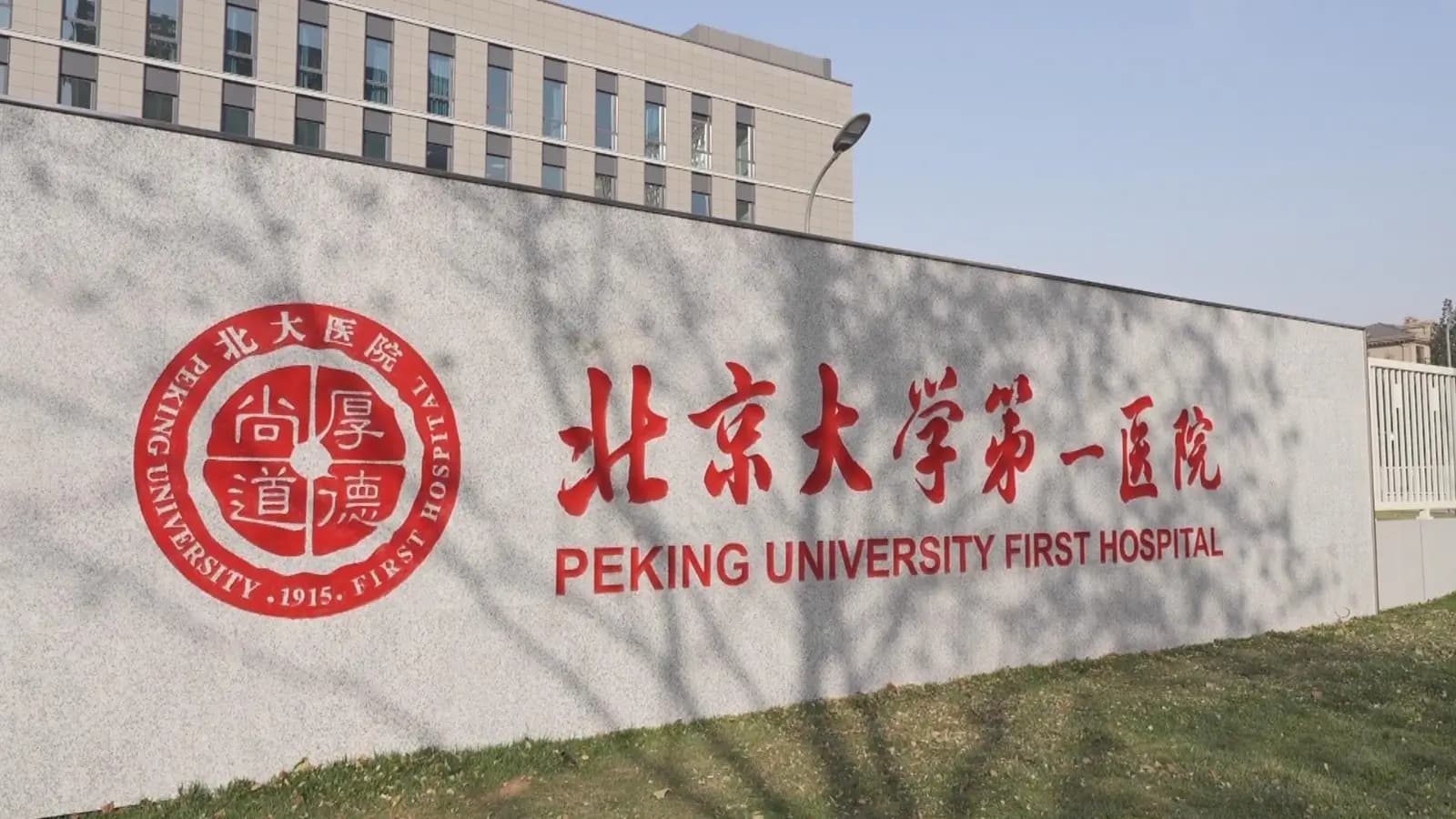
Grade III Grade A
Peking University First Hospital
Peking University First Hospital (PKU Hospital), founded on February 15, 1915, is located at the foot of the old imperial city of Beijing, next to Beihai Park. It is a large-scale, tertiary-level Class A comprehensive hospital integrating medical treatment, teaching, scientific research, prevention, and public health. It is also one of the leading hospitals in China for clinical scientific research and the transformation of research results. Inheriting the hospital motto of "Upholding Morality and Morality," and with the vision of "setting the standard for medical and health services," the hospital always regards serving the health of the people as its fundamental purpose in its development. PKU Hospital was originally the affiliated clinic of Beijing Medical College, and was later renamed several times, including the Affiliated Hospital of Beijing Medical University and the Affiliated Hospital of Peking University Medical College. In 1946, the hospital merged into Peking University along with Peking University Medical College, hence the name "PKU Hospital." In 1952, during the nationwide reorganization of higher education institutions, Peking University Medical College became an independent institution, established as Beijing Medical College, and later renamed Beijing Medical University. The hospital subsequently changed its name to the Affiliated Hospital of Beijing Medical College, the First Hospital of Beijing Medical College, and the First Hospital of Beijing Medical University. In 2000, Peking University and Beijing Medical University merged again, and the hospital was renamed "Peking University First Hospital." For over a century, Peking University First Hospital has possessed a number of pioneering professional disciplines and diagnostic and treatment technologies in my country, such as the first pediatric teaching and research department (1929), urology (1946), nephrology (1950), cardiovascular ward in a general hospital (1950s), pediatric surgery (1950), and pediatric neurology (1961); it established the earliest anesthesiology laboratory in the country (1961) and the first clinical pharmacology research institute (1980); and it pioneered improved intravenous anesthesia (1951) and radical hysterectomy for cervical cancer (1951). Peking University Hospital has made outstanding contributions to China's medical field, including pioneering procedures such as congenital heart disease surgery (1951), labor analgesia (1955), kidney transplantation (1960), intraocular lens implantation (1983), interventional treatment of coronary heart disease (1986), thoracoscopic surgery (1992), laparoscopic urological surgery (1992), minimally invasive lung transplantation (2005), and percutaneous ventricular reconstruction (2013). It also developed my country's first extracorporeal shock wave lithotripter (1984) and first autologous blood recovery machine (1990). The hospital boasts a comprehensive range of disciplines, ranking among the top in my country and internationally. Its clinical medicine discipline has been included in the national "Double First-Class" initiative. Currently, the hospital has 4 key disciplines led by the Ministry of Education, 1 key discipline led by the State Administration of Traditional Chinese Medicine, 3 key disciplines led by Beijing Municipality, and 7 key disciplines (participating) of the Ministry of Education. It has been approved for 29 national key clinical specialty construction projects, covering 25 disciplines. In the 2022 China Hospital Reputation Ranking, one discipline ranked first nationwide, five disciplines ranked in the top five, and nine disciplines ranked in the top ten. Regarding leading talent development, the hospital boasts 1 academician of the Chinese Academy of Engineering, 1 member of the National Natural Science Foundation of China Innovation Group, 6 leading talents/teams of the "Ten Thousand Talents Program," 10 recipients of the National Natural Science Foundation of China's Outstanding Youth Fund, 5 Changjiang Scholars/Special Post Professors, 2 Ministry of Education Innovation Teams, 6 Ministry of Science and Technology Leading Talents/Teams, 13 other national high-level talents, and 31 Beijing high-level talents. Peking University Hospital adheres to a patient-centered approach and continuously optimizes its medical services. It has 39 clinical departments, 12 medical technology departments, 71 wards, and 2259 open beds. In 2023, the hospital saw 3.24 million outpatient and emergency visits, 112,000 inpatients discharged, and nearly 46,000 surgeries performed, with an average length of stay of 5.4 days. The hospital implemented multidisciplinary team (MDT) treatment for complex and critically ill patients, with 53 MDT teams covering various fields including oncology, cardiovascular disease, stroke, metabolic diseases, critical care, and rare diseases, conducting over 2,000 consultations for complex cases annually. The hospital actively expanded its internet-based and telemedicine services, promoting the sharing of high-quality medical resources; it explored new medical technologies, performing over 1,000 surgical robots annually, including a transoceanic ultra-long-distance robotic surgery. On December 18, 2023, the Daxing Campus officially opened, with 1,200 beds and an expected daily outpatient volume of 5,000-6,000 visits. The Daxing Campus adheres to the development concept of "specialized focus with comprehensive support," building a cluster of disciplines strategically supported by the Women and Children's Medical Center, Oncology Medical Center, Interventional Therapy Center, Endoscopic Therapy Center, and Emergency and Critical Care Center. Peking University Hospital was founded on medical education and has always adhered to the fundamental mission of "cultivating morality and talent." Since 1977, the hospital has trained over 3,300 undergraduates and over 4,000 graduate students, including over 2,000 master's students and over 2,000 doctoral students. As one of the first national standardized residency training demonstration bases, it has trained over 1,100 resident physicians since 2005. Currently, there are over 440 undergraduate students and over 740 graduate students enrolled concurrently, with over 900 continuing education students after graduation. The hospital has 20 teaching and research departments, 18 residency training bases, and 35 specialty training bases. It currently offers 24 doctoral degree-granting second-level disciplines and 24 master's degree-granting second-level disciplines. It is a national clinical teaching and training demonstration center and a national standardized residency training demonstration base. The hospital promotes teaching innovation, focusing on cultivating the competence of clinical medical students. This includes innovative curriculum systems for organ system integration, innovative teaching methods such as project-based learning (PBL) and simulation teaching, and innovative evaluation models such as formative assessment and ePortfolio. Peking University Hospital adheres to the principle that science and technology are the primary productive forces and innovation is the primary driving force, leading high-quality development with new-type productive forces. It currently houses one National Clinical Research Center for Skin and Immune Diseases, one key laboratory of the National Health Commission, one key laboratory of the Ministry of Education, one key laboratory of the National Medical Products Administration, and five key laboratories of Beijing Municipality. It is a national drug clinical trial institution, a national medical device clinical trial institution, and one of the first batch of Beijing Municipal Demonstration Project Units for Research-Oriented Wards, possessing 34 specialties in drug clinical trials and 26 specialties in medical device clinical trials. Relying on the National High-Level Hospital Clinical Research and Achievement Transformation Capacity Pilot Project, it has established a biobank, research-oriented wards, interdisciplinary research platforms, and big data AI platforms, forming an innovative platform integrating basic research, translational research, and clinical research. In the 2022 China Hospital Science and Technology Evaluation Ranking (STEM), it ranked 14th, with one discipline ranking first nationwide, six disciplines ranking in the top ten, and nine disciplines ranking in the top twenty. In the past five years, it has been approved for more than 2,300 national, provincial, municipal, university-level, and industry-funded projects, as well as clinical trials, with funding of approximately 1.6 billion yuan, of which over 900 million yuan is from vertical projects. The hospital has published over 6,000 papers, with over 3,000 indexed by SCI (Science Citation Index), including some in top international journals such as *Nature*, *New England Journal of Medicine*, *JAMA*, and *BMJ*. It has received 70 science and technology awards from the national, Ministry of Education, Beijing municipal, and Chinese Medical Association levels, including 12 national and ministerial-level awards. Peking University First Hospital actively undertakes its national mission, promoting the downward flow of high-quality medical resources. It implements aid programs for Xinjiang and Tibet, undertakes the national medical team's mobile medical service mission in Shanxi Province, provides counterpart support to three county-level hospitals—Yonghe County People's Hospital, Linquan County People's Hospital, and Lankao County Central Hospital—and conducts urban-rural counterpart support for Beijing, participating in mobile clinics from urban secondary and tertiary hospitals in rural areas. It has been approved for two national regional medical center construction projects: Peking University First Hospital Ningxia Women and Children's Hospital and Peking University First Hospital Taiyuan Hospital. It has also initiated collaborative projects with the Miyun District People's Government, Linquan County People's Government, China Media Group, Peking University First Hospital, Guizhou Maotai Hospital, and the Ministry of Industry and Information Technology. Peking University Hospital will thoroughly study and implement the spirit of the 20th National Congress of the Communist Party of China, promote and practice the noble professional spirit of "respecting life, healing the wounded and rescuing the dying, being willing to dedicate oneself, and showing boundless love," and cultivate a professional style characterized by high medical ethics, superb medical skills, and rigorous medical conduct. Drawing on a century of history and achievements, and facing a new era and a new journey, the people of Peking University Hospital, moving forward with the times, will continue to uphold the hospital motto of "high moral character and ethical conduct," pursue the vision of "reaching the pinnacle of standards," continue to promote the construction of a national regional medical center, create a "one hospital, multiple campuses" strategic layout, and move towards the overall goal of becoming a world-class university-affiliated hospital.
Established
1915-02-15
Official website
www.pkufh.com/
Snapshot
Active departments
50 active departments available in this language.
Hospital tag
Grade III Grade A
Care planning
Need help comparing departments or travel logistics?
Carevia can help you assess department fit, shortlist hospitals across cities, and coordinate translation, appointments, and post-visit travel planning.
Departments
Clinical departments at Peking University First Hospital
50 department profiles are available for review.
Hemodialysis Center
Our department has over 40 years of experience in hemodialysis and currently has two dialysis centers with a total of 87 hemodialysis machines. We can perform various blood purification methods, including routine hemodialysis, hemodiafiltration, hemoperfusion, high-flux hemodialysis, and plasma exchange. We currently have over 300 patients undergoing long-term maintenance hemodialysis.
Hematology
Renal Intensive Care Unit
Established in 2008, the facility currently has 6 ARRT machines and 6 CRRT machines, capable of performing various CRRT treatments, plasma exchange, and intensive care dialysis. It treats 120-160 patients annually (1700-5000 treatment sessions). Its services cover the entire hospital and it frequently provides major consultations and medical services to other hospitals. Its emergency response teams, established during emergencies, have become a crucial support for the National Health Commission and the Beijing Municipal Health Bureau.
Critical Care Medicine
Rare Disease Medical Center
Rare diseases are a collective term for many diseases with extremely low incidence rates, also known as "orphan diseases." According to the World Health Organization (WHO), they are diseases affecting 0.65‰ to 1‰ of the total population. More than 7,000 rare diseases have been identified, and it is estimated that there are 300 million people worldwide suffering from rare diseases. However, due to China's large population, rare diseases are not actually "not rare" in my country. In 2012, four doctors from the Department of Pediatrics and Neurology at Peking University First Hospital—Ding Jie, Yuan Yun, Xiong Hui, and Wang Chaoxia—led…
Internal Medicine
Peritoneal dialysis center
This department began performing peritoneal dialysis treatment in the 1980s, making it one of the earliest institutions in China to offer this service. A peritoneal dialysis center was established in 2002. It was the first in China to implement a responsible nurse system and a ward-style outpatient management model, and consistently strives to improve treatment quality and disease prognosis. As a major national peritoneal dialysis education and training base, it has trained hundreds of peritoneal dialysis specialists and nurses. Currently, it performs approximately 100 surgeries annually, maintains stable peritoneal dialysis for over 400 patients, and controls peritonitis for 60-80 patient-months.
Nephrology
Intensive Care Unit
The Surgical Intensive Care Unit (SICU) of Peking University First Hospital was established in 1986 by Professor Xie Rong, a pioneer in Chinese anesthesiology, and is one of the earliest surgical intensive care units in China. In 1987, sponsored by the Hope Foundation in the United States, SICU collaborated with Massachusetts General Hospital, aligning its personnel and equipment with then-current US standards. In 2013, SICU became an independent department and was officially renamed the Department of Critical Care Medicine. The Department of Critical Care Medicine has a comprehensive ward management system and treatment protocols, and possesses a complete electronic information system. The ICU medical staff, combining their long-accumulated experience with evidence-based medicine, have developed a comprehensive treatment system integrating anti-infection treatment, respiratory therapy, circulatory support, nutritional support, sedation, and analgesia.
Critical Care Medicine
Department of Oncology
The Department of Chemotherapy and Oncology at Peking University Hospital was established in 1997, making it one of the earliest oncology departments in comprehensive hospitals in Beijing. It treats a wide range of solid tumors, including breast cancer, lung cancer, gastric cancer, colorectal cancer, pancreatic cancer, ovarian cancer, cervical cancer, endometrial cancer, kidney cancer, ureteral cancer, bladder cancer, testicular cancer, prostate cancer, skin cancer, head and neck tumors, sarcomas, and other complex and complicated tumors. The department provides comprehensive treatment including chemotherapy, biotherapy, targeted therapy, endocrine therapy, pain management, and nutritional support, forming a standardized yet distinctive treatment model with treatment outcomes reaching advanced levels in China.
Internal Medicine
Traditional Chinese Medicine and Integrative Traditional Chinese and Western Medicine Department
Peking University First Hospital is one of the earliest comprehensive hospitals to develop traditional Chinese medicine (TCM) and integrated TCM and Western medicine. The Department of Traditional Chinese Medicine and the Department of Acupuncture were established in 1956. In 1975, a TCM ward and a TCM research laboratory were established. In 1987, the Peking University Institute of Integrated TCM and Western Medicine was established. In 1989, the Department of Traditional Chinese Medicine separated into the Department of Acupuncture and the Department of Integrated TCM and Western Medicine. In 2007, the two departments merged and were renamed the Department of Traditional Chinese Medicine and Integrated TCM and Western Medicine. Through the diligent efforts of several generations of TCM and integrated TCM and Western medicine experts, including renowned TCM masters such as Xie Zhufan, Wang Deying, Ma Lan, Zhou Yongfen, Liu Subin, and Zhang Shue, as well as young and middle-aged renowned doctors such as Zhang Xuezhi, the department has developed into a comprehensive institution integrating medical treatment, teaching, and research.
Integrative Medicine
Plastic and Burn Surgery
The Department of Plastic and Burn Surgery, established in 1968, is one of the earliest tertiary hospitals in Beijing to offer plastic surgery services. It currently boasts a complete system of professional facilities and a dedicated team, including a cosmetic surgery outpatient clinic, a wound treatment center, a plastic and burn ward, and outpatient operating rooms. Leveraging the advantages of a large comprehensive hospital, it utilizes multidisciplinary collaboration and excels in complex plastic surgeries. Adhering to the principle of prioritizing surgical safety, it has maintained a record of zero cosmetic surgery failures for many years. Its scope of treatment covers all subspecialties of cosmetic and reconstructive surgery, specifically divided into three professional groups: Cosmetic Plastic Surgery Group, Oncological Plastic Surgery Group, and Wound Treatment Group.
Surgery
1/7